
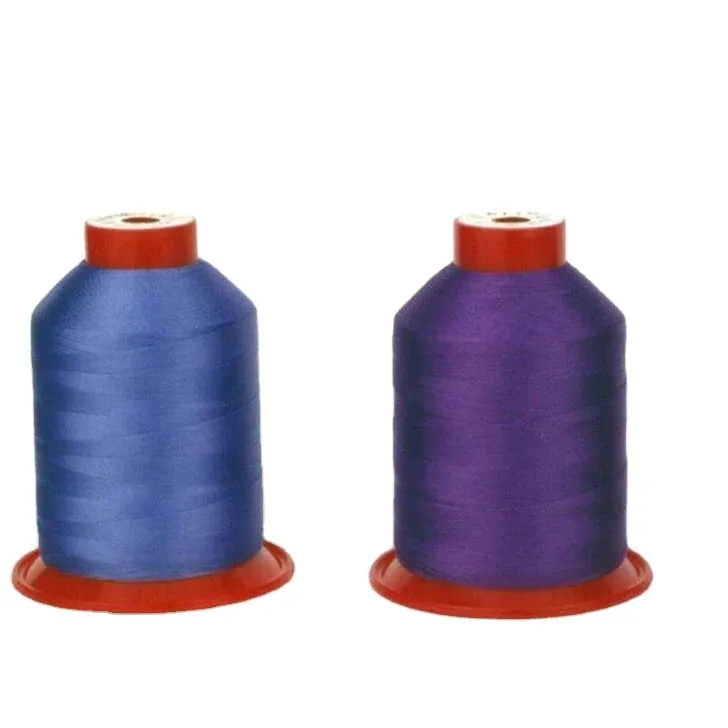
Bonded thread is sewing thread treated with a bonding agent that helps hold its filaments or plies together. In a multi-ply thread, those plies are the strands twisted together to make the finished thread. The bond helps them stay together as the thread moves through the guides, tension assembly and needle eye. Nylon and polyester are common base fibers for this construction.
Bonded thread is worth sampling when ordinary thread starts to fray or separate while sewing through thick or abrasive assemblies, such as a folded canvas hem or a webbing attachment. Choosing a usable thread also means matching its fiber, finished size and elongation to the material and machine. A seam across the thickest part of the assembly tells you more than a straight test seam through a single layer.
How Bonded Sewing Thread Works
What the Bond Holds Together
A twisted multifilament thread starts with bundles of fine, continuous filaments. Several strands can be twisted together into a finished sewing thread. A bonding agent helps the components stay together where the thread bends, rubs or briefly slackens. Bonding can also be used to keep the filaments of a single-cord construction together.
On a machine, separation may show up as a strand lifting near the needle, visible fuzz on the stitch line or repeated breaks at a thick transition. Bonding can help when the plies are opening under those conditions. If both bonded and unbonded samples fray at the same point, check for a worn needle, a rough guide or too little clearance in the needle eye before changing the thread specification.
How Bonded and Soft-Finish Thread Compare
Soft-finish multi-ply thread relies on its twist to hold the strands together. A bonded version of comparable fiber and size adds a finish that helps keep the plies in place. Evaluate the two on the same material stack with a suitable needle. Check whether the bonded sample feeds more consistently, produces fewer lifted strands or gives a cleaner stitch at the same operating speed.
Bonded constructions can differ in stiffness and feel. An operation with a soft seam requirement may favor a more flexible sample, particularly if sewing already runs reliably. Bonding and lubrication also serve different purposes. The bond holds the thread components together, while lubrication helps manage friction as thread travels through the machine. Ask about both finishes if you need to reproduce how an approved sample sews.
Bonded Nylon and Bonded Polyester
Nylon and polyester choices are best compared at a similar finished size. For bags, leather goods or upholstery, start with the seam’s requirements for breaking force, elongation and appearance. For outdoor covers and marine canvas, include sunlight and wet exposure in the selection. A polyester grade with relevant weathering data is a useful candidate for outdoor trials. Compare any nylon candidate against the same exposure requirements and evaluate retained strength and color where they matter.
Our bonded sewing thread specifications list nylon 6, nylon 66 and polyester options. The size table includes 210D/3 and 420D/3 in each of those three material groups. It also lists inside-bonded and outside-bonded finishes in the product overview. Ask which finish is available for the fiber and size you need, then compare samples on the intended machine.
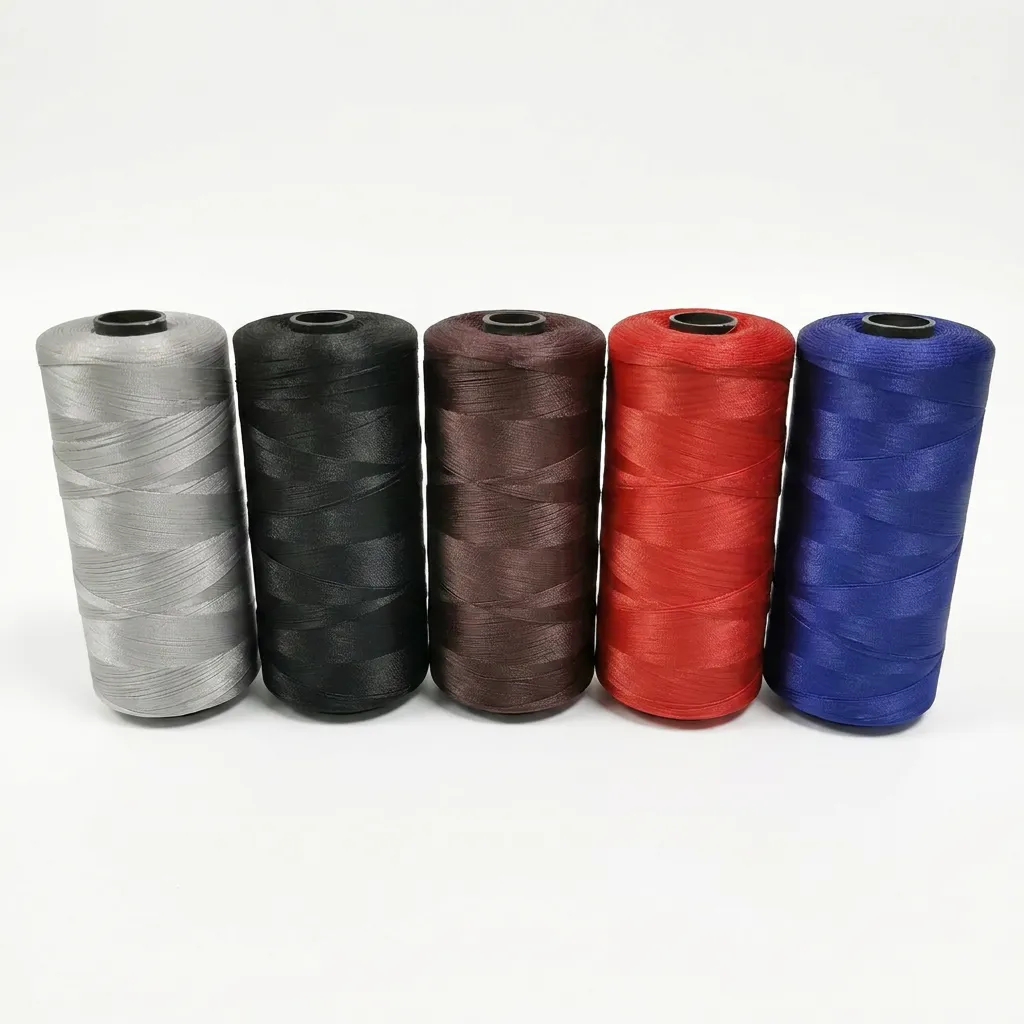
Where Bonded Thread Is Used
Bags, Footwear and Leather Goods
Handle attachments, zipper ends and folded binding can put several materials under the presser foot in one operation. For a bag handle, sew through the actual webbing, reinforcement and body material. Check the stitch line where the foot climbs onto the thicker section. On leather goods and footwear uppers, examine both sides of the seam for skipped stitches, uneven thread exposure and unwanted enlargement of the needle holes.
Upholstery, Webbing and Outdoor Canvas
Upholstery work combines visible stitch lines with places where the seam crosses piping or reinforcement. A heavier thread may suit the desired appearance but still needs enough clearance through the eye and a needle that leaves an acceptable hole. An upholstery seam study varied thread size and stitch length on a layered upholstery fabric and measured the resulting seam strength. Use both variables in your own trial if a straight seam runs well but the layered assembly fails.
For webbing assemblies, test the overlap with the actual stitch pattern and watch whether the thread breaks, the material tears, or the seam pulls out. For canvas covers, include folded hems and corners in the test pieces. Where the seam is exposed outdoors, inspect the stitching after representative exposure as well as straight off the machine. If the assembly also needs to keep water out, test the sewn construction with its specified seam treatment.
How to Specify and Test Bonded Thread
Confirm Size, Construction and Finish
For a designation such as 210D/3, 210D describes the nominal denier of each component and the 3 describes the number of plies. At the same ply count, 420D/3 uses heavier components than 210D/3. For comparisons across suppliers, request the finished Tex, which expresses mass in grams per 1,000 meters. Finished size is useful for matching a previous thread and for narrowing the needle choices before sampling.
Record the fiber, finished Tex, ply count, bonding and lubricant finish, color and package. Where the machine or application calls for it, include the direction of twist and any exposure or performance requirements. A cone that fits the thread stand and unwinds consistently matters during longer runs, so match the sample package to the way production thread will be fed.
Run the Production Seam
Use the intended machine, layers, needle, stitch type and stitch length. Start with the machine manufacturer’s needle and thread guidance, then sew both a straight run and the thickest transition at the intended operating speed. Check stitch balance on both sides and record skipped stitches, fraying, breaks and needle marks. Change one setting at a time so the operator can identify what improved the result.
Measure the thread and the sewn assembly separately. ASTM D204 covers physical properties of sewing thread, including breaking strength, elongation, twist and loop strength. ASTM D1683/D1683M addresses failure in sewn seams of woven fabrics. Use the seam test suited to the actual material and record the failure mode alongside the load. Two samples that fail at a similar load can call for different changes if one breaks the sewing thread and the other tears the fabric.
Request a Bonded Thread Sample for Your Seam
Send us the material stack, machine and needle details, current thread size and a description of where the seam gives trouble. If the seam is exposed to weather, include the expected exposure and any test requirements. Share your sewing requirements so we can discuss fiber, size and finish options for the samples you plan to trial.
Bonded Sewing Thread FAQ
Is bonded thread always nylon?
Bonded describes the finish or construction. Bonded nylon and bonded polyester are both available. Specify the fiber separately, along with the finished size and bonding finish, when you request a sample.
Does bonded thread make every seam stronger?
Bonding helps keep the components of the thread together during sewing. Finished seam strength depends on the thread, material and stitch design. If the material tears at the needle holes or pulls away from the stitches, test changes to the seam construction as well as the thread.
Can I use bonded thread on a home sewing machine?
Check the sizes your machine and needle system can handle. A fine bonded thread may work within that range. Heavy industrial sizes may require a machine that can feed and tension the thread, clear it through the needle eye and sew the intended material stack.
Is bonded thread waterproof?
Bonding helps hold the thread components together. Where water can travel along the thread, ask for a finish with documented resistance to wicking. For a cover or bag that needs to shed water, also check the seam design, needle holes and any seam sealing under the required exposure.