
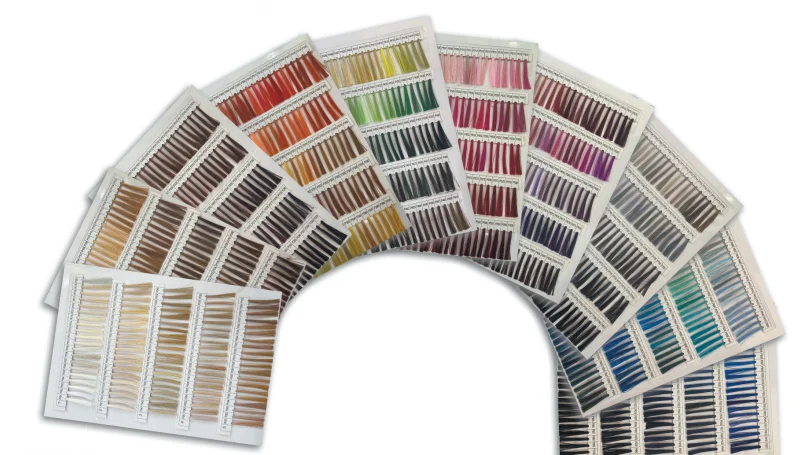
Upholstery thread is sewing thread selected to join and finish the coverings used on furniture, cushions and similar upholstered products. The name describes the job. It does not identify one fiber, thickness or treatment. A sofa closing seam, a decorative stitch line and an outdoor cushion can require different thread specifications.
The useful question is what the seam must withstand and how it should look. A general sewing thread may work for a particular light decorative operation, while another seam needs a different size, construction or finish. Replacing an approved upholstery thread by color alone leaves those differences unchecked.
What makes upholstery seams different?
A cushion cover is pulled around a three-dimensional filling. Sitting, getting up and handling the cushion change the shape of that assembly. The thread has to work with the cover fabric, seam allowance and stitch construction as the load moves through the seam.
Consider three seam roles before choosing a product:
| Seam role | What to assess | Useful sample detail |
|---|---|---|
| Closing seam joining cover panels | Opening under load, thread breaks and movement of fabric yarns | Actual cover fabric, backing and seam allowance |
| Visible topstitching | Line definition, color, balance and surface regularity | Finished face viewed on a filled cushion |
| Piping, corners and intersections | Stitch formation through changes in thickness | The complete layered junction, including piping |
One thread can sometimes serve several operations. Approve it against each operation rather than assuming that a clean straight seam proves it will also sew a bulky corner.
Upholstery thread vs. regular sewing thread
Both terms cover many products. Compare the actual specifications: fiber, construction, finished size, elongation, surface treatment and package. A heavier appearance is only one part of the comparison. It does not reveal how the thread will pass through the needle or behave in the finished seam.
A thicker replacement changes the volume of thread entering the fabric and may require a different needle and tension setting. A finer replacement can change the visible stitch line and the seam’s response to load. Keeping the old settings while changing the thread therefore makes it difficult to judge the substitute fairly.
Our high-tenacity thread range is a starting point for reviewing industrial sewing options. Match the proposed grade to the cover and operation before deciding whether it can replace an existing thread.
Choose material and construction together
Polyester and nylon candidates
Polyester and nylon sewing threads are candidates for upholstery development. The material name should be followed by a grade and a finished size. Ask for the breaking-force and elongation information needed by the project, with the test conditions, so the comparison goes beyond a fiber label.
Finetex’s sewing thread product page lists polyester and nylon 6/66 options and includes sofas among its applications. It also lists multiple yarn-count and package options. Use that range to request a specific sample; the listing does not select the grade for a particular cushion construction.
What bonding adds to the specification
Bonding treats the thread bundle to help keep its strands together during sewing. It is a construction and finish choice, separate from whether the fiber is nylon or polyester. Compare the handling of the proposed thread through guides, the needle eye and the layered assembly.
For a fuller explanation of the treatment, see our guide to what bonded thread is. For upholstery selection, record whether bonding is part of the approved specification so a later order does not substitute a differently finished thread under the same material name.
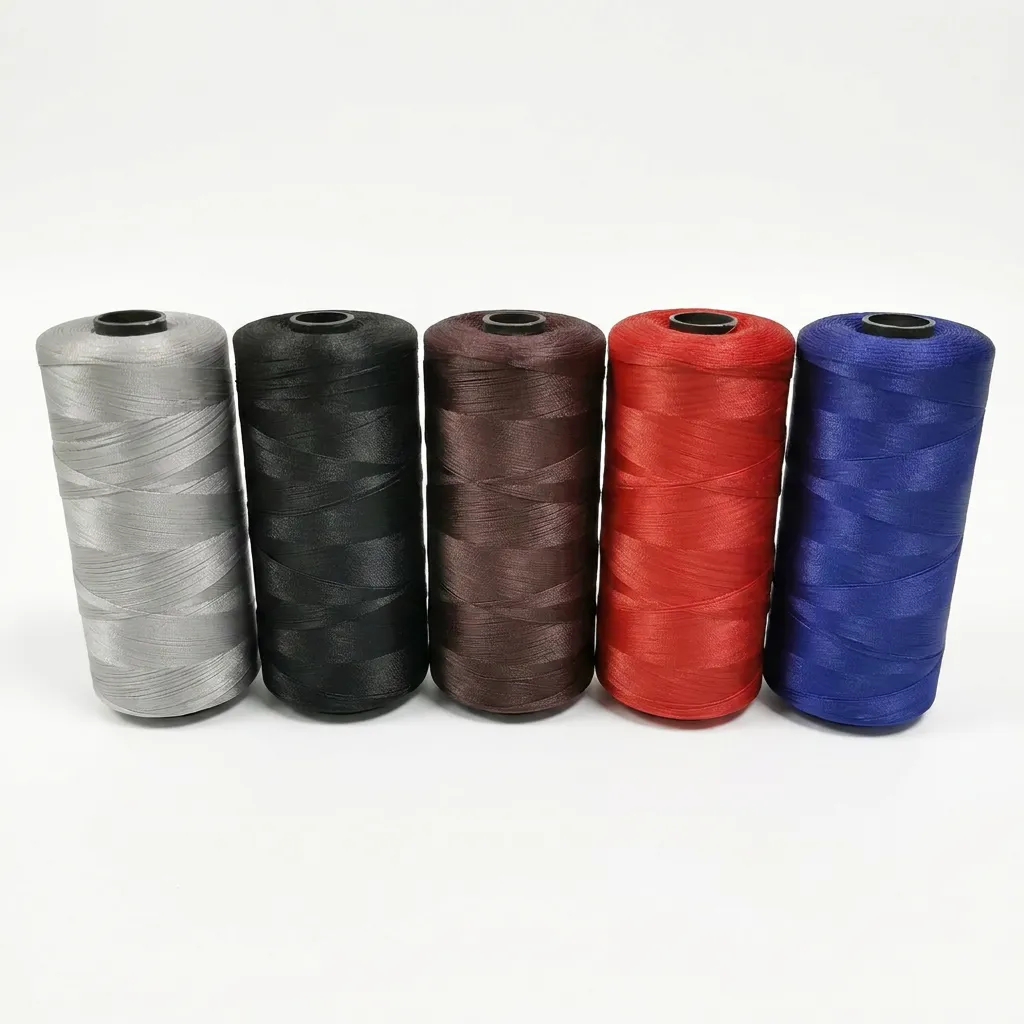
Thread size must fit the cover and the machine
Request the size system used on the quotation and package label. A trade number, a denier-and-ply description and a finished tex value should be identified clearly before offers are compared. Keep the supplier’s original designation alongside any confirmed conversion.
Start a sewing trial with the needle system specified for the machine. Then select a compatible needle size and point for the thread and cover material. Groz-Beckert’s sewing problem guidance explains that a thread too large for the needle eye can tear, while insufficient needle stability can cause problems through thick layers. This is why increasing thread size also requires reviewing the needle.
Evaluate the hole left in the cover as well as thread passage. On a woven upholstery fabric, examine yarn displacement and surface damage. On a coated cover, inspect the pierced surface and the area around the stitch. A needle change that improves feeding can still alter the visible finish.
Separate thread failure from fabric slippage
A seam that opens is not always a thread-strength problem. If the thread breaks, investigate the thread specification, sewing damage and seam design. If the stitches remain intact while fabric yarns move away from the seam, increasing thread strength alone does not address that movement.
ASTM’s upholstery seam-slippage method measures resistance to yarn movement at a sewn seam in woven upholstery fabrics under controlled conditions. Its public scope distinguishes this fabric test from a yarn/seam test. Ask the laboratory which method answers the project’s failure question and state the agreed acceptance requirement.
Retain both the result and the failure description. A report showing the fabric, seam assembly and direction tested is more useful for the next design decision than a single strength number detached from the sample.
Indoor and outdoor cushions need different briefs
An indoor sofa and a terrace cushion may share a shape but encounter different conditions. For an outdoor project, specify the expected sunlight, wetting, drying and cleaning exposure. Ask for evidence relevant to the proposed thread grade and color, then decide how the complete seam will be evaluated.
The Association for Contract Textiles bases its fabric performance guidelines on construction, application and indoor or outdoor use. Apply the same discipline to the purchasing brief: identify the cover type and service environment before choosing the checks. Fabric data and thread data answer different parts of that brief.
For removable covers, include the intended care process in sampling. Review the seam after cleaning and drying, checking color transfer, surface appearance, distortion and opening. Keep the care conditions with the approval record so production and purchasing work to the same expectation.
A practical cushion comparison
For a hypothetical sofa cushion development, prepare a closing seam and a visible topstitch with each shortlisted thread. Use the same cover batch, filling, panel dimensions and seam allowance. Include a corner or piping intersection rather than comparing only flat strips.
Record the thread grade and size, needle system and size, stitch length, tension settings and sewing speed. Inspect the samples after filling: check the seam on the face and reverse, look for uneven stitches and note whether the cover pulls away from the seam.
If a sample fails, change the variable linked to the observed problem. For example, examine a slippage issue through the fabric and seam construction; investigate repeated thread breaks through the thread path and needle before trying a larger thread. Repeat the relevant comparison after the change.
Keep an approved physical sample with its written specification. Include color reference, package form and lot identification, plus the changes that require a new trial. This gives a replacement-thread decision a clear reference when another order arrives.
Discuss the seam you need to build
Send us the cover material, furniture or cushion type, seam role, machine details, current thread designation and the problem you want to resolve. A photo of both sides of the seam and a description of the care environment will help focus the request. Discuss your upholstery requirements with our team to identify a thread sample for evaluation.
Upholstery Thread FAQ
Can I use regular sewing thread for upholstery?
Compare the particular thread with the seam’s requirements. A light decorative operation and a loaded cushion closing seam are different jobs. Approve a replacement through its specification and a representative sample, including the intended care process.
Is thicker upholstery thread always better?
No. More thread changes the visible line, needle clearance and interaction with the cover. Select a size that forms an acceptable seam on the intended machine and passes the agreed checks on the complete assembly.
Does every upholstery seam need bonded thread?
Bonding is one specification choice. Assess whether it helps the selected thread sew consistently through the actual operation. Keep fiber, size and finish separate on the order so the approved construction can be reproduced.
Can the same thread be used on outdoor cushions?
Review the outdoor exposure and care requirements for that grade and color. Request relevant supporting data and evaluate the assembled seam under the agreed conditions before extending an indoor approval to outdoor use.