
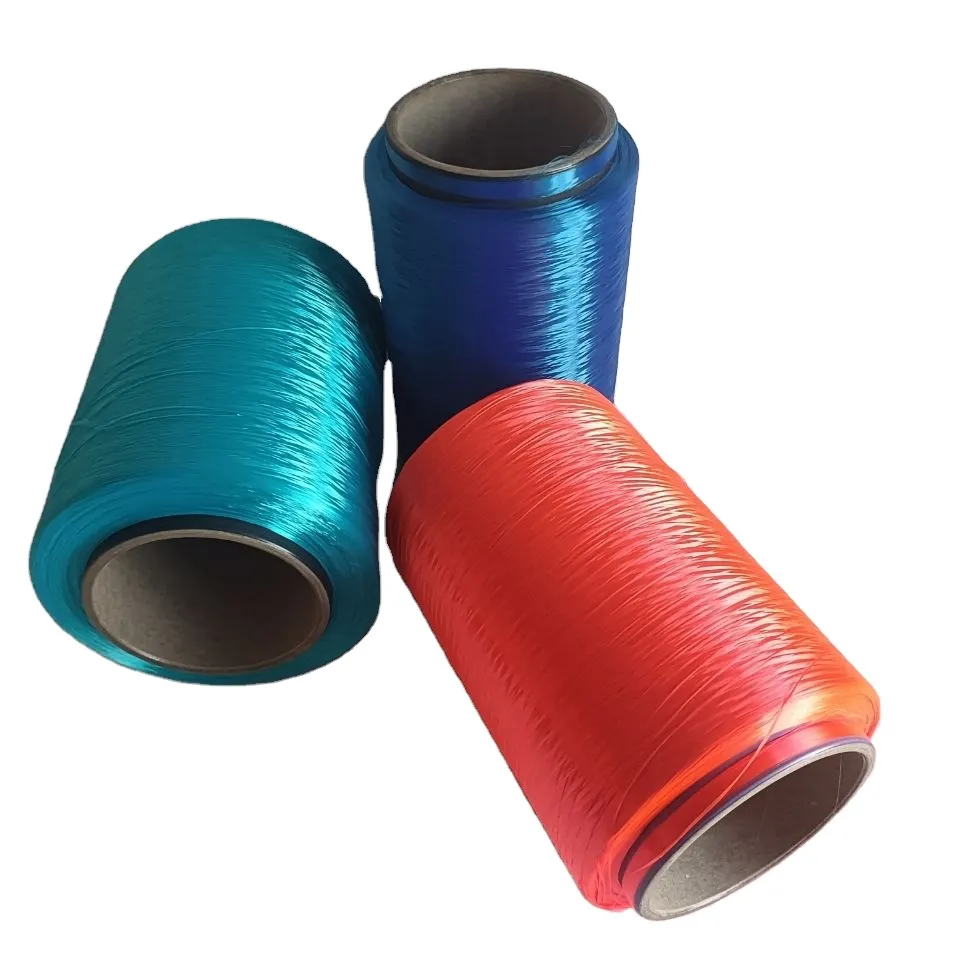
For an outdoor net, rope or canopy, a yarn that meets the strength specification when new can still lose strength after repeated sun exposure. Polypropylene UV resistance depends on the grade and how it is stabilized. Polyester is another option for outdoor textiles, but its performance also depends on the yarn formulation, construction and exposure. The most useful comparison starts with the exact yarn you intend to buy and ends with a test of the finished article.
What sunlight changes in an outdoor textile
UV exposure can trigger chemical changes in polymer fibers. In polypropylene (PP), reactions involving light and oxygen can break polymer chains, leaving the filaments less able to stretch and carry load. A yarn may become brittle or develop surface damage. A U.S. rope study compiled by the National Bureau of Standards describes how UV stabilizers can slow this deterioration in polypropylene rope.
Polyester can also lose mechanical performance outdoors. In a geotextile field study, researchers exposed nonwoven polyester and polypropylene samples to outdoor weathering. After two months, both samples had lost tensile strength in at least one test direction. The results varied by direction and construction. For a buyer, that is a reason to test the directions that carry load in the finished textile, such as the warp and weft of a canopy fabric.
Color change and strength loss answer different questions. A cover can fade enough to be rejected even while its fabric stays within the mechanical specification. Conversely, visual inspection cannot quantify how much breaking force a weathered cord retains. If both appearance and strength matter, put both measurements in the test plan.
How to choose between polypropylene and polyester yarn
Polypropylene for webbing, cord and net trials
Start with polypropylene when low weight matters and you can qualify the exact outdoor grade. Finetex lists polypropylene multifilament yarn for webbing and industrial fabric. Its specifications include 840D and 1000D, with raw white and dyed color options. For a net or cord trial, ask whether the specific count, color and grade can be supplied with UV stabilization. Keep the grade and color identifiers on samples so the material qualified in testing can be traced to the production order.
Polyester for ropes and outdoor fabrics
Finetex also lists high-tenacity polyester filament yarn for ropes and industrial fabrics, including 840D and 1000D. Matching nominal denier is a useful starting point because it gives you options with the same mass per unit length. Then compare breaking force, elongation and how each yarn runs on your equipment. A change in filament count, twist or yarn finish can affect how the yarn runs and how the finished cord, mesh or fabric behaves.
Our functional yarn range includes a UV-resistant option and lists polyester, nylon and PP. Specify the base fiber, yarn count and shade when you inquire. Ask for a report covering the proposed combination and check whether it identifies the sample, the exposure method and the property measured after exposure.
How to specify and test UV resistance
Keep the first comparison fair
If you are replacing the yarn in an existing net, make the first trial with the same mesh size, knot or junction, and border details. Record the yarn count, lot and construction on each sample. If two possible replacements require different machine settings to produce a sound mesh, note those settings and compare the finished nets as separate builds. For a sewn cover, keep stitch type and spacing consistent when screening fabrics, then check the chosen fabric with its production thread and seams. A trial that changes the yarn and the assembly at the same time cannot tell you which change produced the result.
Agree on the exposure conditions
Tell the lab where the textile will be used, whether it spends the entire season outdoors, and whether it sees cycles of sun and moisture. A canopy with a coated face, a mesh net with both sides exposed and a cord that is stored between uses present different exposure conditions. Decide which surface to expose or whether the lab should test separate specimens for each surface. Ask the lab to report the light source, exposure cycle, duration and any relevant temperature or moisture settings so future samples can be compared under the same conditions.
The NIST weathering laboratory controls UV exposure, temperature and humidity and compares chamber results with outdoor data when developing service life models. For a side-by-side trial, run the candidate materials under the same chamber conditions and include a reference material with known performance if one is available. Test a separate, unexposed specimen set from each batch to establish the starting value. For a new construction or climate, compare chamber results with field measurements before using chamber time to estimate a service interval.
Measure what the finished product needs to retain
Choose the measurement before testing. For rope, compare breaking force and elongation on finished cordage. For netting, test representative mesh and attachment details where loads transfer to the border. For webbing, ask the lab to measure breaking force and elongation using a method suited to the product. The U.S. seat belt webbing procedure gives one example of measuring strength retained after a defined light exposure. For sewn fabric assemblies, include seams or hems as separate specimens when those details carry load. An exposed yarn test is useful for screening. A finished specimen shows whether the textile geometry or assembly introduces a weak point.
For a comparison based on group averages, calculate retention by dividing the average breaking force of exposed specimens by the average breaking force of matched unexposed specimens and multiplying by 100. In a hypothetical comparison, a net sample that drops from 240 N to 180 N retains 75% of its original breaking force. A second that drops from 200 N to 170 N retains 85%. If the specification calls for at least 175 N after exposure, the first sample meets that requirement and the second falls short. Reporting both retained force and percentage lets a buyer see how much strength is available after exposure and what fraction the sample lost under the test conditions.
Build an outdoor inspection routine
Start inspections at the places that experience the most wear. Check the exposed face and attachment points of a net, the sections of a rope that run over edges, and the seams or folded edges of a canopy. Record fraying, broken filaments, surface cracking or changes in flexibility. Photograph the same locations over time so changes are easier to spot. Where the product instructions allow, store removable textiles out of direct sunlight between uses. For load-bearing items, follow the finished product’s inspection and retirement criteria, since visible wear alone gives an incomplete picture of remaining strength.
Prepare a sample request for your outdoor textile
Send us the textile construction, yarn count and target shade, along with the expected sun and moisture exposure. Include the test method and the breaking force or appearance you need after exposure. For an existing product, tell us which part tends to fail first and share a sample or photo if you can. Send your outdoor yarn requirements to discuss which grade and documentation are available for a trial.
Polypropylene and Polyester UV Resistance FAQ
Is polypropylene yarn naturally UV resistant?
Polypropylene is susceptible to UV weathering. For sustained outdoor exposure, select a grade with documented stabilization and compare its strength before and after a defined exposure cycle. Use the same grade and shade for sampling and production.
Does polyester always last longer outdoors than polypropylene?
The ranking depends on the grades, the construction and the exposure. Compare the proposed polyester and stabilized polypropylene in the same chamber run or field trial. Use a comparable construction if you are trying to isolate the effect of the yarn, and test the final build before approving either material.
Does a dark shade prove that a yarn is UV stabilized?
Shade cannot identify the stabilizer package or predict strength retention. Ask for the grade specification and exposure data for the color you plan to order. If the report covers a different color, ask whether the required shade can be included in your trial.
What should I ask for in a UV test report?
Ask for the sample identification, test method and exposure cycle, including the light source and test duration. Look for the initial result, the exposed result and the number of specimens. Specify the property that matters to the product, such as mesh breaking force or shade change, and check that the report uses the same construction you intend to buy.