
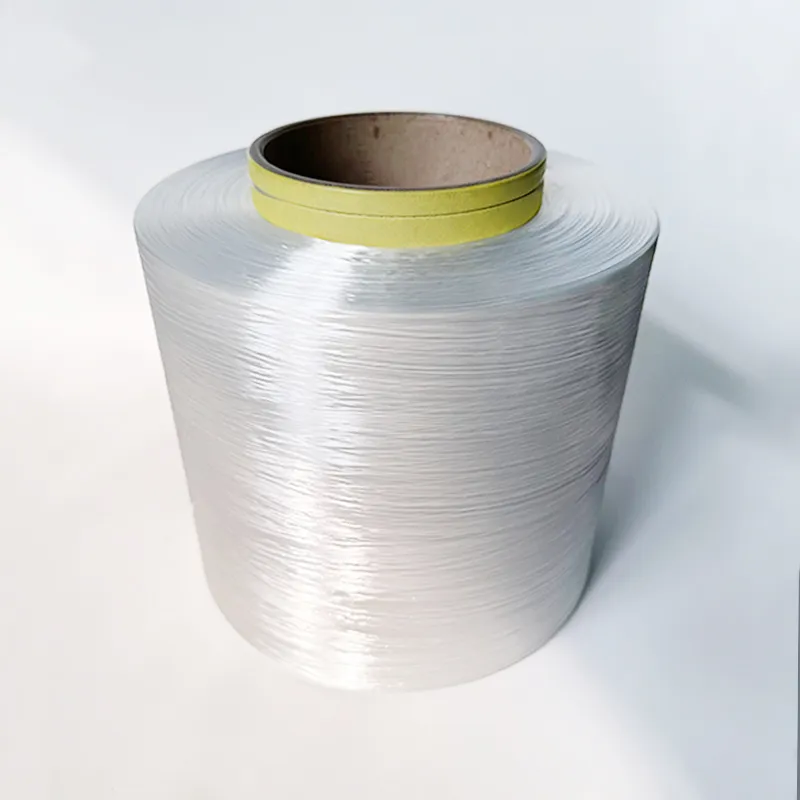
Start with the fabric’s job, then choose the yarn construction that can deliver it. Flat FDY keeps the filaments relatively straight and compact. DTY introduces crimp through texturing, which can add bulk and useful give to a knitted structure. Those differences affect how a yarn enters a machine, how a fabric feels, and which tests matter before approval. They do not replace a specification. The right comparison still depends on polymer, yarn size, filament count, finish, machine settings and finishing conditions.
What is FDY yarn?
FDY means fully drawn yarn. During drawing, the filaments are stretched in the length direction and the polymer chains become more oriented. In the usual flat form, the filaments run with little intentional waviness, so the bundle has a smooth, compact profile. FDY can be made in different luster levels, and luster should be treated as its own specification rather than assumed from the word “FDY.” A terminology description from India’s Directorate General of Trade Remedies uses the familiar flat, non-textured description for polyester FDY.
Where high-tenacity polyester FDY fits
For a woven industrial fabric, the first question is which direction carries the load. If FDY will be used in a warp, compare the proposed grade’s tenacity, elongation at break and linear density with the construction’s requirements. A coating, heat-setting step or other thermal process can change fabric dimensions, so request shrinkage information under a stated temperature, time and test method before making a process decision. Finetex lists industrial fabrics, rope and sewing thread among the applications for its high-tenacity polyester FDY. That product-page application list identifies intended uses, but it does not substitute for a grade-specific data sheet or a trial on the customer’s equipment.
What the flat profile changes
A compact filament bundle can be useful when you need a clean surface, controlled coverage or stable handling through a weaving or knitting process. The same compactness can make a fabric feel less lofty than one built with a textured yarn. Surface appearance also depends on weave or knit structure, dyeing and finishing. Keep those variables separate when reviewing samples. If two fabrics look different, record whether the yarn type, luster, construction or finish changed before attributing the result to FDY alone.
What is DTY yarn?
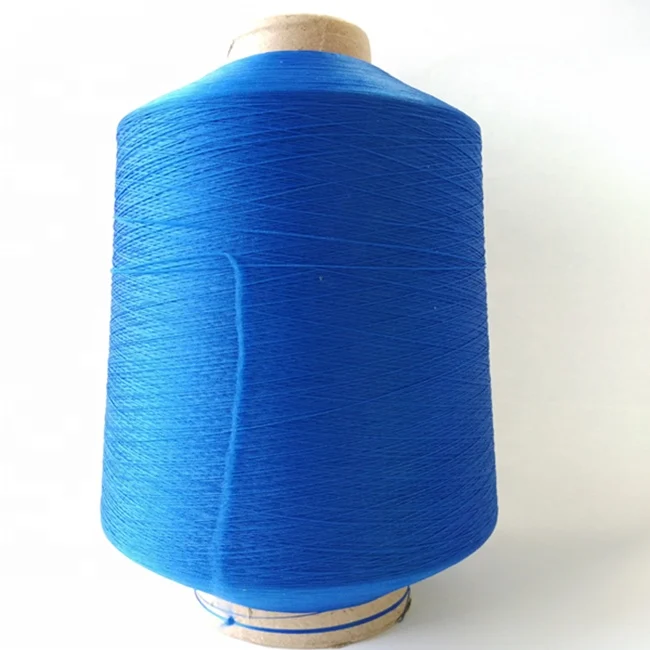
DTY means draw-textured yarn. A common route starts with partially oriented yarn, then combines drawing with texturing. In false-twist texturing, twist is inserted temporarily, heat is applied, and the twist is removed. The filaments retain a crimped configuration after relaxation. BISFA’s filament-yarn terminology distinguishes false-twist and stabilised false-twist yarns and describes textured filament yarn in relation to crimp. In practical terms, crimp can increase apparent bulk and can allow a knitted loop to open and recover more readily than a comparable flat bundle.
Where nylon DTY fits
A sock must open over the heel and settle around the foot. A seamless garment may need different panels to give, cover and recover while the wearer moves. Textured nylon can contribute body and a softer hand in these constructions because the crimp changes how the yarn occupies space in the loop. Finetex lists socks and seamless garments as applications for its nylon 6 and 66 DTY. The product page does not identify the exact yarn grade used in every pictured garment, so approve the yarn against the intended stitch structure and finishing route rather than by image comparison.
DTY is not the same as a covered elastic yarn
DTY obtains its mechanical give from the textured filaments. A covered elastic yarn contains a separate elastic core wrapped by another yarn. That construction can provide a different level and pattern of extension and recovery. If a cuff, waistband or close-fitting zone needs more recovery than the knit and DTY can provide, identify the need as a construction question and sample the relevant elastic system. Do not describe a DTY package as covered yarn unless the supplier specification confirms a covering process.
FDY and DTY in the same project
One fabric can use both yarn types when each position has a different job. A flat yarn may be selected for a direction that needs a smooth, compact surface, while a textured yarn is used where added body or give is useful. For example, a trial may place flat FDY in the warp and DTY in the weft, but the choice must be confirmed in the actual construction. Warp and weft experience different tensions, densities and finishing effects. A combination that looks balanced in a small swatch may behave differently after production-width heat-setting or coating.
What to compare before ordering
Start with the construction, not the abbreviation
Write down the end use, fabric type, machine gauge or loom setup, stitch or weave structure, target fabric weight and finishing route. State whether the yarn will be used alone, plated, combined with another filament or covered by a separate process. Then identify the property that matters most. Industrial woven goods may prioritise load response and dimensional stability. Socks and seamless knits may prioritise extension, recovery, cover, hand and resistance to barre or other appearance variation. A request that says only “FDY” or “DTY” leaves too many decisions open.
Compare the variables on the quotation
Ask suppliers to show polymer family, yarn type, nominal linear density, filament count, luster, finish, package form and any stated tolerance. The U.S. Department of Commerce’s product description for polyester textured yarn treats denier, number of filaments and finish or luster as separate descriptors. Equal denier therefore does not mean equal filament count or equal fabric behavior. Record whether a value is nominal, minimum or a test result, and make sure different offers use comparable units and conditioning.
Separate yarn tests from fabric tests
Yarn-level measurements help you check incoming material, but they cannot answer every fabric question. ASTM’s D4031 method notes that yarn bulk measurements have limited ability to predict properties of the finished fabric. For a knit, make a swatch with the intended stitch density, machine settings, dyeing and finishing. Measure extension and recovery in the direction that the garment will use. For a woven industrial fabric, test the finished construction in warp and weft, then examine width, crimp, coating adhesion or other requirements that belong to the final product. Keep the sample recipe with the results so a later supplier comparison is fair.
Check process behavior on the intended machine
Run a controlled trial long enough to reveal stops, tension drift, yarn breaks, needle or guide interaction and package unwinding behavior. Note the machine, feed setting, take-up or let-off setting, ambient conditions and finishing batch. A yarn can meet a nominal count and still need a different setting because its surface, crimp or finish changes friction and feeding. If the trial changes two variables at once, record that limitation instead of assigning the outcome to yarn type alone.
Inspect the relaxed yarn and finished swatch
Package winding keeps yarn under tension and can hide crimp. Unwind a short length, let it relax without pulling it straight, and compare the visual profile with the supplier’s description. This is a screening step, not a substitute for identification or laboratory testing. On the finished swatch, check width, weight, cover, surface regularity, extension and recovery after the agreed conditioning period. Photograph the swatch beside its specification and retain the package label or lot reference.
A practical sampling workflow
- Define the job in measurable terms. Record the product, construction, target dimensions, appearance and the property that must improve or remain stable.
- Send the same brief to each supplier. Include the current yarn specification, a reference swatch if available, machine details, finishing steps and the quantity needed for a meaningful trial.
- Request a comparable quotation. Ask for the yarn type, polymer, count, filament count, luster, finish, package details, tolerances and available test information. Mark any field that is not confirmed.
- Screen the package and relaxed yarn. Check labels, winding, visible contamination, knots or damage, then observe a relaxed length without stretching it.
- Run the smallest representative trial. Use the intended machine settings where possible and keep a control sample from the current yarn.
- Finish and condition both samples in the same way. Measure the properties tied to the end use, then compare appearance and handling as a separate review.
- Approve a grade and a change-control rule. Record the accepted specification, lot identification, test method, tolerance and what requires re-sampling, such as a polymer, luster, finish or package change.
Choose a yarn to sample
Send the end use, fabric construction, machine or gauge, target count, current specification and the property you need to improve. A finished swatch and a photo of the package can help clarify the comparison, but they do not replace the written specification. Finetex can review the application and direct you to the relevant yarn range through the contact page. Ask for the test conditions behind any number that will be used for approval, and keep the agreed sample recipe with your purchasing record.
FDY and DTY Yarn FAQ
Is FDY always stronger than DTY?
No single abbreviation determines the result. Strength and elongation depend on polymer, drawing or texturing route, linear density, filament count, finish and grade. Compare the values for the specific yarns under comparable test conditions, then confirm the result in the finished construction.
Does DTY automatically make a fabric elastic?
DTY can add crimp, bulk and useful give, but fabric extension and recovery also depend on stitch or weave geometry, yarn combination, finishing and any separate elastic component. Use a finished swatch to measure the behavior required by the product.
Can two yarns with the same denier replace each other?
Not automatically. Denier describes linear density. Filament count, luster, finish, crimp and polymer can still differ, changing feeding, cover, hand and appearance. Treat a same-denier replacement as a new sample until the construction passes the agreed checks.
Can both yarns be used in one fabric?
Yes, when the construction assigns each yarn a clear function. Trial the proposed placement in the actual warp, weft, course or wale direction, and evaluate the finished fabric after the intended finishing process.
Can I identify FDY or DTY by looking at the package?
Only as an initial screen. Winding tension can hide crimp, and package appearance does not confirm polymer, count or finish. Use the supplier’s label and specification, then verify with the relaxed yarn and the finished-swatch tests.