
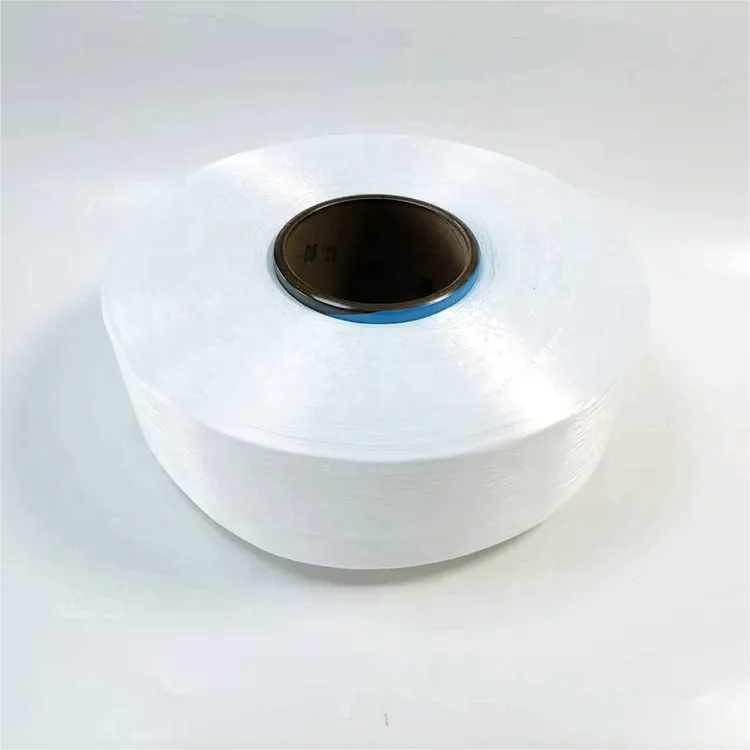
Filament yarn is made from one or more continuous fibers. Spun yarn is made from shorter fibers, called staples, that overlap and are held together along the strand. That difference is a useful starting point for choosing a yarn. A flat filament bundle can give a fabric a smooth face, while staple yarn can give the surface a softer, more textured look. Texturing a filament or changing the way a staple yarn is spun can shift the result considerably.
For a buyer, the decision starts with what the yarn has to do. A warp yarn for an industrial fabric has to run reliably under tension and meet the fabric’s load requirements. A yarn for a jersey or pillowcase may be chosen primarily for the way the finished surface feels against the skin and looks after laundering. Both decisions get easier when fiber composition, yarn construction and fabric construction are specified separately.
How Filament Yarn and Spun Yarn Are Built
Filament Yarn Uses Continuous Fibers
A monofilament is a single continuous strand. A multifilament yarn gathers several continuous strands into one bundle. Polyester and nylon filaments are commonly made by extruding molten polymer through the fine holes of a spinneret, cooling the emerging strands and drawing them. The resulting yarn can be kept flat or textured to change how much space it occupies and how it behaves when extended. NC State’s filament technology lab shows how continuous yarns can be extruded, textured or cut into staple.
With multifilament yarn, ask for the total linear density and the number of filaments. Two bundles can have the same mass per unit length but divide that mass among different numbers of strands. A higher filament count at the same total linear density means finer individual filaments on average. This matters when a buyer wants a flexible fabric with a particular hand, or when a mill needs to match the construction of a yarn it already runs.
Spun Yarn Uses Overlapping Staple Fibers
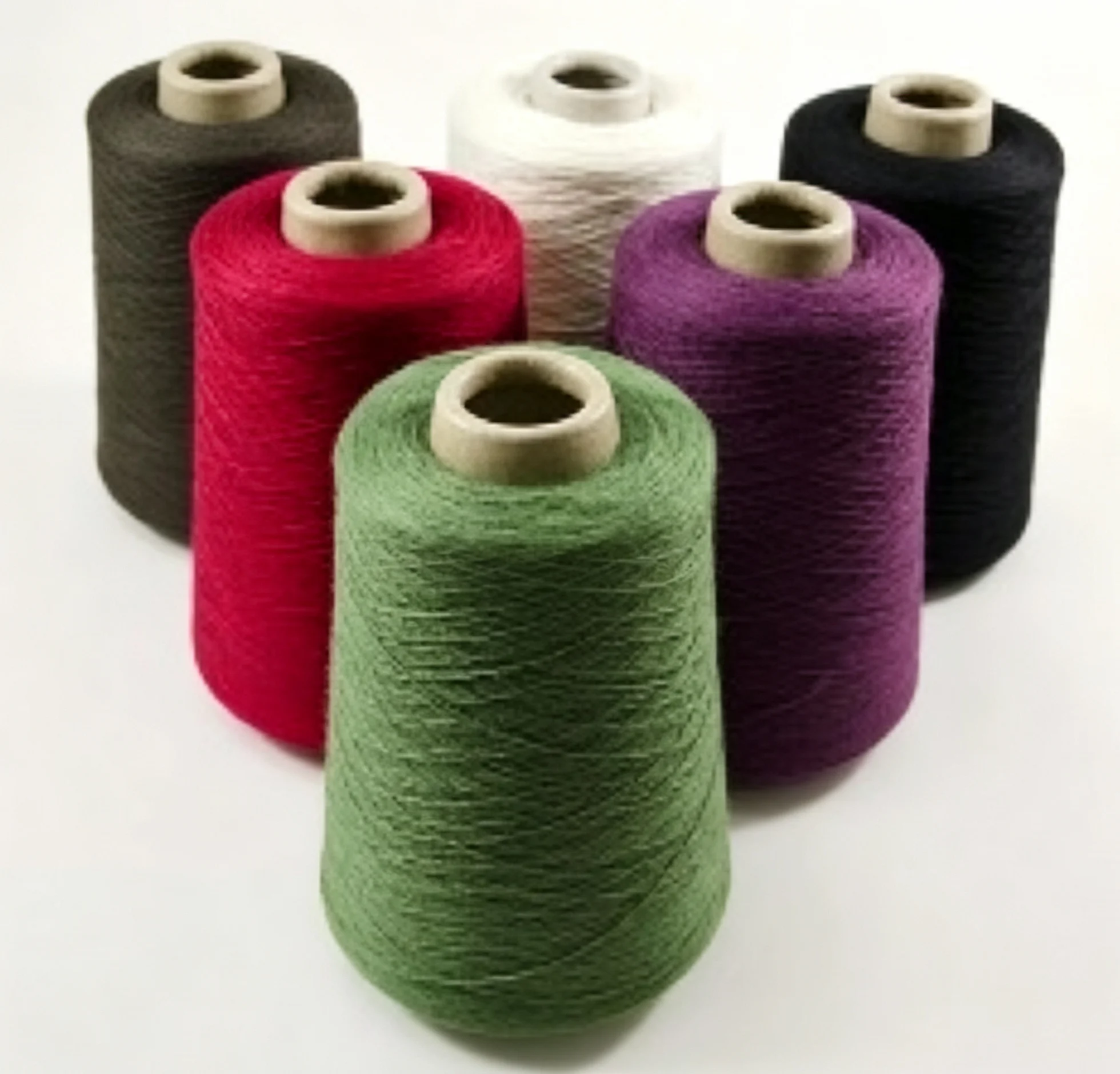
Cotton grows as staple fiber. A manufactured fiber such as polyester can also be supplied in staple form and spun on its own or in a blend. In ring spinning, the fiber assembly is drawn down to the desired size and twist binds the overlapping fibers into a strand. Rotor and air-jet spinning arrange the fibers differently. Cotton Incorporated’s cotton spinning bulletin describes how these routes affect yarn characteristics and the requirements of weaving and knitting.
Some staple fiber ends project from the yarn surface. Their length and number influence how fuzzy the yarn looks. A buyer who wants a cleaner cotton surface can ask about a compact-spun option and compare its hairiness with a conventional ring-spun sample. If the desired fabric has a visible texture, compare that texture after finishing, when the yarns have settled into the fabric.
What Changes in the Finished Fabric
Surface, Luster and Cover
A flat multifilament yarn often makes sense when the fabric needs a clean face with little visible fuzz. A bright filament can make reflected light more noticeable, especially where the weave leaves long stretches of yarn exposed. If the buyer wants a subtler appearance, ask for a lower-luster option and judge it under the lighting where the material will be used. For a fabric made with spun yarn, projecting fiber ends can soften the outline of individual yarns and change how sharply the weave or stitch pattern reads.
Cover is how fully the yarns fill the fabric surface. A textured filament yarn can add bulk, which can help cover gaps between yarns. Weave density and knit loop length also influence cover. When comparing samples for opacity, look at each swatch against the same background and check it both at rest and at the extension expected in use. That second check is especially useful for fitted knits.
Breaking Force, Elongation and Wear
Where a yarn has to carry load, ask for breaking force and elongation at break. Breaking force tells you the load at which the test strand breaks. Breaking tenacity relates that force to the strand’s linear density and is useful when comparing yarns of different sizes. ASTM’s single-strand tensile method covers measurements for monofilament, multifilament and spun yarns within its scope. Agree on the test method and reporting units before comparing supplier figures.
Fabric performance also depends on the number of yarns sharing the load and how they interlace. On fabric exposed to repeated rubbing, inspect how the finished face changes during a trial. Loose fibers can entangle into pills, while a snag can pull a yarn or a loop out of line. If a clean appearance matters, compare finished samples after the same wear or laundering cycle and record which surface change you see.
Where to Sample Each Yarn
Industrial Weaving and Reinforcement
Finetex lists polyester FDY and nylon 66 FDY in its high-tenacity yarn range. Both product pages list industrial fabric as an application. For a woven reinforcement, give the supplier the target yarn size, whether it goes in the warp or weft, and the finished material’s load requirement. Where a fabric will be coated or heat processed, run the sample through that step before checking dimensional change and strength. Measure the finished fabric in the direction where it will carry the load.
Apparel, Socks and Home Textiles
For a smooth lining or a knit with a more even-looking face, a multifilament can be a useful starting point. A textured filament is another candidate when the design needs more bulk. Finetex lists socks and seamless garments among the uses for its nylon draw-textured yarn. A trial knit lets you check how the fabric feels, how much it opens when stretched and how well it returns to shape.
For a cotton jersey, a woven pillowcase or a fabric with a visible staple surface, start with a cotton spun yarn. Finetex’s spun yarn range includes a 100% cotton yarn for knitting and weaving, with ring-spun and compact-spun options listed on the product page. Ask for the spinning route and count of the sample you receive. If you are comparing two cotton yarns, use the same fabric construction and finishing sequence so you can see what changes with the yarn.
What to Include in a Yarn Specification
Record the fiber composition and the job the yarn will do in the fabric. For filament yarn, add the total linear density, filament count, flat or textured construction, and luster. For spun yarn, add the count system, ply, spinning route and any treatment that affects the surface. Convert quotations to a common unit such as tex, which expresses grams per 1,000 meters. A higher denier means more mass for a given length, whereas a higher English cotton count means less mass for the same length. Confirm whether a quoted size applies to a single strand or the assembled yarn.
Run a short machine trial using a representative package before committing to bulk. In weaving, watch for end breaks, uneven feeding and fuzz collecting in the yarn path. In knitting, check tension and loop formation and mark any places where the surface changes. Then finish the swatch and compare it with your approved reference for hand, appearance and the performance properties that matter in service. Keep the yarn specification with the approved swatch so a future order can be checked against both.
Match the Yarn to Your Fabric
Discuss your yarn sample with Finetex if you are developing a woven or knitted fabric. Share a swatch or construction sheet, the yarn’s role, its count and ply if known, and the property you need to match or improve. For a surface-led design, describe the appearance you want after finishing. For an industrial fabric, include the required load or dimensional limits and how you will measure them.
Filament Yarn and Spun Yarn FAQ
Can the same fiber be sold as both filament and spun yarn?
Yes. Polyester is available as continuous filament or as staple that can be spun. If a specification says only “100% polyester,” ask how the yarn is constructed. The same fiber name can describe yarns with different surfaces and different behavior during fabric production.
Is textured filament yarn a spun yarn?
Textured filament yarn still consists of continuous strands. The texturing changes their arrangement or shape and can give the bundle a fuller appearance. Staple spun yarn gets its structure from overlapping short fibers. Check the construction on the specification when a soft or bulky appearance makes the yarn difficult to identify by sight.
Can I use filament and spun yarn in the same fabric?
Yes. A weaver can trial a filament warp with a spun weft where the two directions have different jobs. Sample the combination through finishing and check each direction for dimensional change. Also compare both faces of the fabric, since the weave can expose different amounts of warp and weft on each side.